
Skip to content

Cart

Your cart is empty

Article: The History of Portuguese tinned food: Why Portuguese Sardines are Considered Among the Best in the World

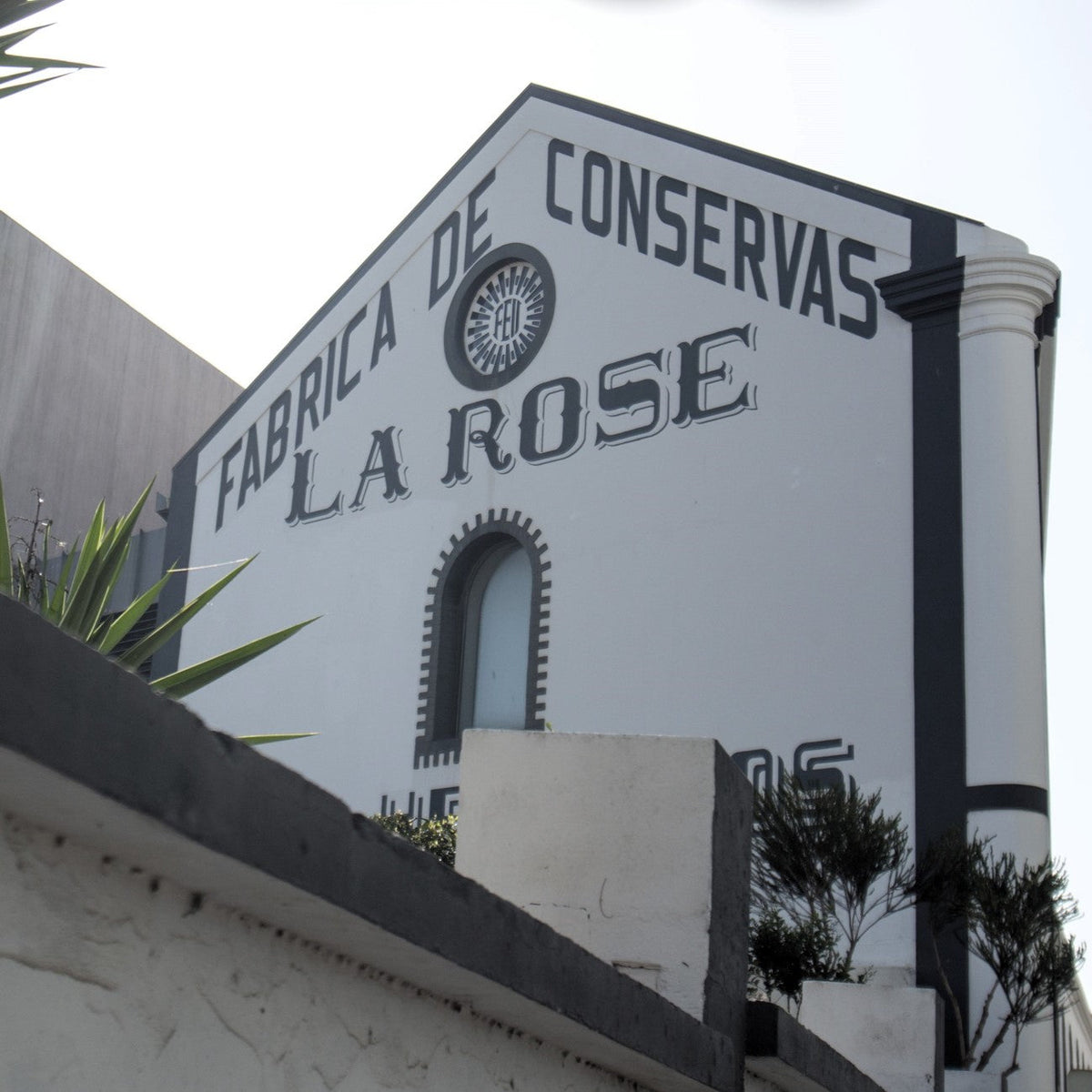
Museu de Portimão, housed in the historic La Rose sardine cannery in Portimão, Portugal.

The History of Portuguese tinned food: Why Portuguese Sardines are Considered Among the Best in the World

History of Portuguese Tinned Fish

If you were to ask any seasoned food enthusiast today which country is most closely associated with the finest tinned fish, the answer would very likely be Portugal.

This is no coincidence or simply the result of successful marketing. Behind every tin of authentic Portuguese sardines lies more than 150 years of craftsmanship, refined production methods, respect for quality ingredients, and a rich maritime heritage. Yet this story did not begin in factories, but along the Atlantic coast, where fishing boats laden with shimmering sardines returned to harbour each morning.

Today, Portuguese tinned sardines are regarded as one of the defining symbols of Portuguese gastronomy. They are celebrated for their exceptional flavour, outstanding quality, nutritional value, and centuries-old production traditions. In the 19th century, however, preserving fish in tins was first and foremost a practical solution – a way of keeping freshly caught fish for as long as possible without compromising its quality.

It was this challenge that ultimately transformed Portugal into one of the world's leading producers of tinned fish.

The story begins not in a factory, but in the Atlantic Ocean

To understand the success of Portuguese tinned fish, one must first understand Portugal itself.

Unlike many European countries, Portugal has always looked towards the Atlantic. With almost 1,000 kilometres of coastline, the sea has never been a barrier but one of the country's greatest assets. For centuries, it has sustained communities, opened trade routes, encouraged seafaring, and shaped the Portuguese way of life.

Fishing was never simply an occupation. In many coastal communities, it became a family tradition, passed down from generation to generation. Boys grew up watching their fathers and grandfathers at sea, and many embarked on their first fishing trips while still in their teens.

One of the most important catches for Portuguese fishermen has always been the Atlantic sardine (Sardina pilchardus), a species native to the eastern Atlantic Ocean.

Atlantic sardines still form a significant part of Portugal's fishing industry and remain the principal species used in many authentic Portuguese tinned sardines.

This remarkable fish possesses qualities that make it ideal for premium preservation in tins:

  • naturally high oil content;
  • firm yet delicate texture;
  • subtle, well-balanced flavour;
  • high levels of omega-3 fatty acids.

The Atlantic itself plays an equally important role. Its cooler waters, rich in oxygen and nutrients, provide ideal conditions for healthy, well-fed sardines to thrive. For this reason, Portugal's coastline remains one of Europe's most important fishing grounds for Atlantic sardines.

The Portuguese coast – the cradle of early industrial traditions

Long before the first fish-preserving factories were established, Portugal's coastline was already home to a range of industries closely connected to the sea. One of the most fascinating examples is the tide mill (moinho de maré), which harnessed the natural power of the tides to grind grain. These remarkable structures first appeared during the Middle Ages and remained an important part of the coastal economy for centuries.

Although tide mills were not directly connected with the production of tinned fish, they reflect the long-standing industrial ingenuity that had already developed along Portugal's coastline well before the 19th century. This culture of innovation and practical engineering later helped create the conditions in which Portugal's tinned fish industry could flourish.

Historic tide mill at Seixal Bay, Portugal, one of the oldest surviving tide mills in Europe.

(One of the best-preserved examples is the historic tide mill in Seixal Bay)

This centuries-old structure is considered one of the few surviving tide mills of its kind in Europe. It stands as a reminder that industry and innovation had already taken root along Portugal's coastline long before the rapid expansion of the tinned fish industry in the 19th century.

Life before tinned fish

Today, it is difficult to imagine life without refrigeration, cold storage or modern transport. Until the 19th century, however, fishermen had no such advantages.

Even after a successful day's catch, fish had to be sold quickly, as there was no reliable way to keep it fresh for long.

As a result, every catch had to be:

  • sold at the local market;
  • eaten the same day; or
  • preserved using the only widely available method at the time – heavy salting.
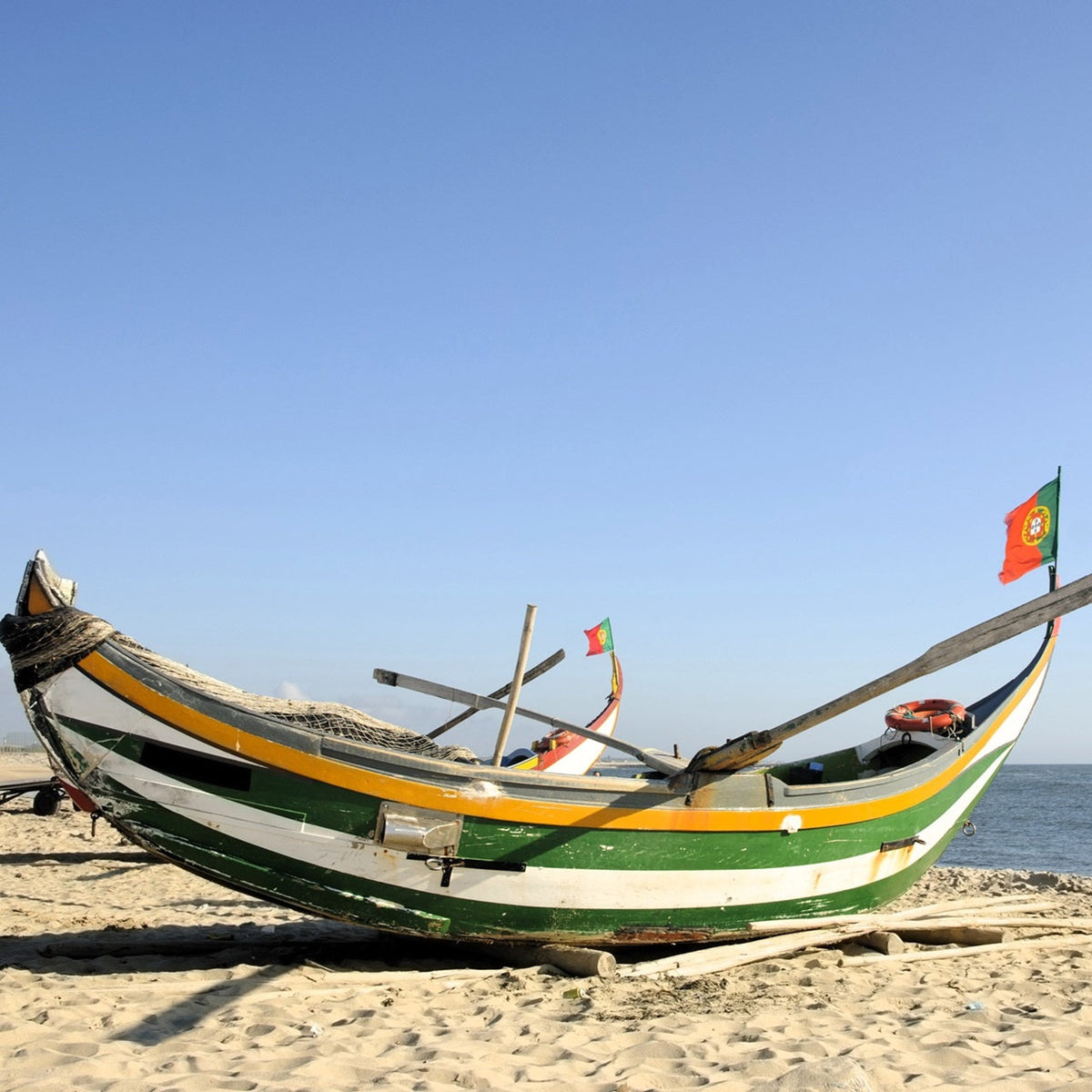
Traditional Portuguese fishing boats on Nazaré Beach, Portugal, reflecting the country's long maritime and fishing heritage

Salting was an effective preservation method, but it had its limitations. Fish lost some of its natural texture, its flavour changed, and the finished product was not always suitable for long-distance transport or fine dining.

Portugal's coastline was often so rich in sardines that, on days of particularly abundant catches, some of the fish simply could not be processed or sold in time.

This resulted not only in economic losses but also in the waste of a valuable natural resource.

A better solution was needed.

The technology that transformed the food industry

In the early 19th century, one of the greatest breakthroughs in food preservation took place in Europe.

The French inventor Nicolas Appert developed a method of preserving food by sealing it in airtight containers and heating it to destroy harmful microorganisms. This technique was later adapted for metal tins, which proved lighter, stronger and far more practical for transport than glass containers.

Portuguese entrepreneurs quickly recognised that this innovation had the potential to transform the country's fishing industry.

If fish could be preserved in tins immediately after landing, there would no longer be a need to sell it in haste at local markets. Instead, it could be transported across Europe and eventually exported to even more distant markets.

This marked a turning point that reshaped not only Portugal's fishing industry but also the country's food production as a whole.

The first Portuguese tinned fish factories

By the middle of the 19th century, the first tinned fish factories had begun to appear along the Portuguese coast.

They were strategically built close to the country's main fishing ports, allowing freshly caught fish to be processed as quickly as possible after landing.

The principal canning centres included:

  • Matosinhos, now widely regarded as the tinned fish capital of Portugal;
  • Setúbal, one of the country's oldest fishing towns;
  • Peniche, renowned for its rich maritime heritage;
  • Portimão, in the Algarve; and
  • Póvoa de Varzim, on Portugal's northern coast.

Proximity to the ports became one of the industry's greatest advantages.

The less time that passed between the catch and the preserving process, the better the fish retained its freshness, texture and natural flavour. More than 150 years later, this principle remains at the heart of many of Portugal's finest tinned fish producers.

Discover the history at the Portimão Museum

To gain a deeper understanding of how Portugal's tinned fish industry developed, a visit to the Portimão Museum (Museu de Portimão) in the Algarve is well worth making.

The Portimão Museum – where history comes to life

The museum is housed in the former La Rose Sardine Cannery (Fábrica de Conservas La Rose), one of the most important sardine canning factories in southern Portugal during the early 20th century. When the building was restored, much of its original industrial infrastructure was carefully preserved, including production equipment, workshops and factory spaces. Visitors can see first-hand how Portuguese tinned sardines were once produced.

Today, the museum tells not only the story of canning technology but also of the people who built the industry – fishermen, factory workers and the coastal communities whose livelihoods depended on it. It is one of Portugal's most significant industrial heritage sites, highlighting the vital role that the tinned fish industry played in the country's economy and the development of its coastal towns.

A visit to the museum offers valuable insight into why Portuguese tinned fish is still synonymous with craftsmanship, tradition and meticulous attention to detail.

Why Portuguese tinned fish stood out from the beginning

Interestingly, Portuguese producers took a different approach from many of their European competitors at a relatively early stage. Rather than fully mechanising production, they chose to retain the most important stages of manual preparation.

The reason was straightforward. Sardines are delicate fish that can easily break or lose their shape if handled carelessly. This not only affects their appearance but also the overall quality of the finished product.

Skilled workers carefully selected sardines of a uniform size, cleaned them by hand and arranged them neatly into each tin, ensuring that every fish remained intact.

Over time, this level of care became one of the defining characteristics of Portugal's tinned fish industry.

The tins that travelled the world

Once it became clear that fish preserved in tins could maintain its quality for months – or even years – Portuguese producers recognised an opportunity that extended far beyond the domestic market.

Initially, exports were destined for neighbouring European countries. Later, Portuguese tinned fish reached North and South America, Africa and many other parts of the world.

Gradually, this small Atlantic nation became one of the world's leading exporters of tinned fish. It all began with a simple idea: preserving the freshness of freshly caught fish for as long as possible.

The golden age of Portuguese tinned fish

By the end of the 19th century, Portugal's tinned fish industry had proved that preserving fish in tins could do far more than reduce food waste. It had become one of the country's most important industries.

Tinned fish made it possible to transport Portuguese catches thousands of kilometres while preserving their quality.

This marked the beginning of what historians often describe as the golden age of the Portuguese tinned fish industry.

When tinned fish became an export icon

During the late 19th century, Europe experienced rapid industrialisation, urban growth and expanding international trade.

As more people moved inland, access to fresh fish became increasingly limited.

Tinned fish provided the perfect solution.

It was:

  • easy to transport;
  • capable of retaining its quality for long periods;
  • suitable for storage without refrigeration; and
  • ideal for export to markets around the world.

Portuguese producers took full advantage of these opportunities.

Within just a few decades, exports of Portuguese tinned sardines had become one of the country's most important food industries.

Why did the world choose Portugal?

Portugal was far from the only European country producing tinned fish during the 19th and 20th centuries. France, Spain and Italy also had well-established canning industries. Nevertheless, Portuguese tinned fish earned an outstanding international reputation for several important reasons.

1. Abundant Atlantic sardines

The Atlantic Ocean provides ideal conditions for large populations of Atlantic sardines (Sardina pilchardus). This enabled Portuguese producers to work with locally caught fish that often reached the factory within hours of being landed.

The short time between catch and processing helped preserve the fish's natural texture, flavour and nutritional value.

2. Quality before quantity

From the early days of the industry, many Portuguese producers understood that long-term success would depend not on producing the cheapest products but on maintaining consistently high standards.

Particular attention was given to:

  • carefully selecting the fish;
  • maintaining a uniform size;
  • using only fresh ingredients;
  • preserving authentic flavours; and
  • hand-packing every tin.

These principles continue to define many of Portugal's finest tinned fish producers today.

3. Close proximity to fishing ports

Many Portuguese canneries were built immediately beside the country's principal fishing ports, allowing freshly landed fish to be processed without delay.

The shorter the time between landing and preserving the fish in tins, the better its freshness, texture and natural flavour could be maintained. This principle remains one of the hallmarks of premium Portuguese tinned fish today.

Why is Portuguese tinned fish so highly regarded?

Feature Why it matters
Atlantic sardines Fresh, locally caught fish with a naturally rich flavour and higher oil content.
Close proximity to fishing ports Faster processing helps preserve freshness, texture and flavour.
Hand-packing Protects the shape of each fish while ensuring exceptional presentation and quality.
Olive oil Enhances flavour while helping preserve texture and moisture.
Traditional craftsmanship More than 150 years of expertise passed down through generations.

Sardines - more than just food

By the beginning of the 20th century, tinned sardines had become far more than an everyday food in Portugal.

They had become an important part of the nation's economy, culture and identity.

Entire coastal communities depended on the industry. Some people caught the fish, others worked in the factories, while others designed labels or organised exports to international markets.

The tinned fish industry created thousands of jobs and became one of the principal economic drivers of many Portuguese coastal towns.

Why do vintage Portuguese sardine tins look like works of art?

Looking at Portuguese sardine tins from the early 20th century, it is easy to forget they were designed to hold everyday food. Their labels feature colourful illustrations, sailing ships, maritime scenes, royal emblems, exotic animals and beautifully decorative typography.

As Portuguese tinned fish was exported to dozens of countries, manufacturers competed to make their products stand out on shop shelves.

The tin itself became more than simple packaging - it became the identity of the brand.

Many Portuguese producers continue this tradition today, which is why beautifully illustrated tins remain as much a part of Portugal's tinned fish culture as the sardines inside them.

Traditional Portuguese sardine tins with colourful vintage-style labels displayed at a market in Portugal


How olive oil became a hallmark of Portuguese tinned fish

In the early days, fish was preserved in tins using a variety of methods. Over time, however, one ingredient came to define Portuguese tinned fish and remains a hallmark of quality today – olive oil.

It was chosen for good reason.

Olive oil:

  • helps preserve the fish's texture;
  • protects it from drying out;
  • allows the flavours to develop naturally; and
  • adds a delicate aroma.

Over time, olive oil became one of the defining characteristics of premium Portuguese tinned fish, setting it apart from cheaper, mass-produced alternatives.

A tradition that continues today

The Industrial Revolution brought automation, but Portugal's tinned fish industry chose a different path.

While modern technology was embraced, many producers deliberately retained the most important stages of hand preparation. The reason is simple – even the most advanced machinery cannot always assess the quality of each fish as accurately as an experienced craftsperson.

A skilled worker can immediately recognise what matters most for a premium product:

  • whether the fish is the right size;
  • whether its skin is intact;
  • whether its texture is sufficiently firm; and
  • whether it will look appealing when the tin is opened.

That is why hand preparation remains one of the defining characteristics of Portugal's finest tinned fish.

Not all canneries were the same

During the 19th and 20th centuries, hundreds of canneries operated across Portugal, but they did not all share the same philosophy.

Some producers prioritised volume and large-scale exports. Others chose a different approach – producing smaller quantities while placing far greater emphasis on ingredient quality, traditional recipes and careful craftsmanship.

It was these, often family-run, businesses that preserved many of the traditional methods now regarded as part of Portugal's rich tinned fish heritage.

It is no coincidence that many of Portugal's most respected producers trace their origins back more than a century.

Portugal chose quality over quantity

During the second half of the 20th century, inexpensive tinned fish became increasingly common on the global market.

Many manufacturers competed by lowering prices, increasing automation and expanding production. However, a significant number of Portugal's premium producers chose a different direction.

They remained committed to traditional recipes, hand-packing, high-quality olive oil and meticulous fish selection, believing that lasting success depends not on offering the lowest price but on delivering consistent quality.

Their decision has stood the test of time.

Today, Portuguese tinned fish is valued not simply as a convenient store-cupboard staple, but as a premium gastronomic product.

From everyday food to gourmet delicacy

If you had visited most European food shops during the middle of the 20th century, tinned sardines would probably have been found alongside other everyday tinned foods.

They were appreciated for their convenience, long shelf life and affordability.

Today, however, perceptions have changed dramatically.

More and more consumers choose Portuguese tinned sardines not simply because they are convenient, but because they value authentic food with a clear origin, traditional production methods and exceptional quality.

Portuguese tinned sardines have become firmly established in modern gourmet cuisine.

Why has the world rediscovered Portuguese tinned fish?

Over the past two decades, consumers have increasingly sought authentic food rather than simply the cheapest option.

People now place greater value on:

  • provenance;
  • production methods;
  • ingredient quality;
  • heritage; and
  • the producer's reputation.

Portuguese tinned fish naturally meets these expectations. It offers qualities often missing from mass-produced alternatives – authenticity, craftsmanship, transparency and generations of expertise.

Today, authentic Portuguese tinned fish can be found not only in specialist delicatessens but also on the menus of fine restaurants around the world.

From pantry staple to dinner table centrepiece

Not so long ago, many people regarded a tin of sardines simply as an emergency meal or something to keep in the cupboard.

Today, the picture is very different.

In Portugal and many other countries, tinned sardines are proudly served to guests on toasted bread, alongside olives, mature cheeses and fresh vegetables, as part of a tapas spread or even as the centrepiece of a meal.

It is a perfect example of how the same product can be transformed when quality becomes the priority.

In Portugal, tinned sardines are part of the national identity

Outside Portugal, the country is often associated with Port wine or Lisbon's iconic yellow trams. For the Portuguese themselves, however, sardines are among the nation's most recognisable culinary symbols.

This is particularly evident during the Santo António celebrations in June, when fresh sardines are grilled in the streets of Lisbon, colourful decorations fill the city and sardine motifs appear almost everywhere.

Although the festival centres on freshly grilled sardines, it has also helped strengthen the international reputation of Portuguese tinned sardines.

Many visitors who enjoy sardines while travelling in Portugal later seek out authentic Portuguese tinned sardines back home to recreate the same experience.

Why do some tins cost considerably more?

At first glance, most tins of sardines appear very similar, yet their prices can vary considerably.

The difference usually lies not in the brand itself, but in how the product is made.

Premium producers invest more in:

  • higher-quality fish;
  • more careful selection;
  • hand-packing;
  • superior olive oil;
  • smaller production batches; and
  • time-honoured recipes.

As a result, a higher price usually reflects greater craftsmanship, care and attention devoted to every tin.

The Portuguese tinned fish industry today

Although Portugal's first canneries were established more than 150 years ago, many of the industry's core principles remain unchanged.

As in the past, the greatest emphasis is placed not on speed but on the quality of the fish. Premium producers aim to minimise the time between landing the catch and preserving it in tins, while every sardine is carefully selected and prepared.

Naturally, today's industry benefits from advanced equipment, rigorous quality control and sophisticated food safety systems. Yet the underlying philosophy remains unchanged: technology should support quality, never replace it.

Sustainability has become an essential part of quality

Today, premium tinned fish is judged not only by its flavour but also by how responsibly it is produced.

Consumers increasingly want to know how fish are caught, how stocks are managed and whether producers operate sustainably.

Portuguese sardine fisheries are managed under European Union quotas, seasonal fishing restrictions and scientific advice designed to protect Atlantic sardine stocks for future generations.

Some producers also participate in independent certification schemes or operate their own sustainability initiatives, although these vary between manufacturers.

When choosing tinned fish, it is therefore worth considering not only the brand but also the product's provenance, ingredients and the producer's commitment to quality and sustainability.


Leave a comment

This site is protected by hCaptcha and the hCaptcha Privacy Policy and Terms of Service apply.

All comments are moderated before being published.

Other recipes

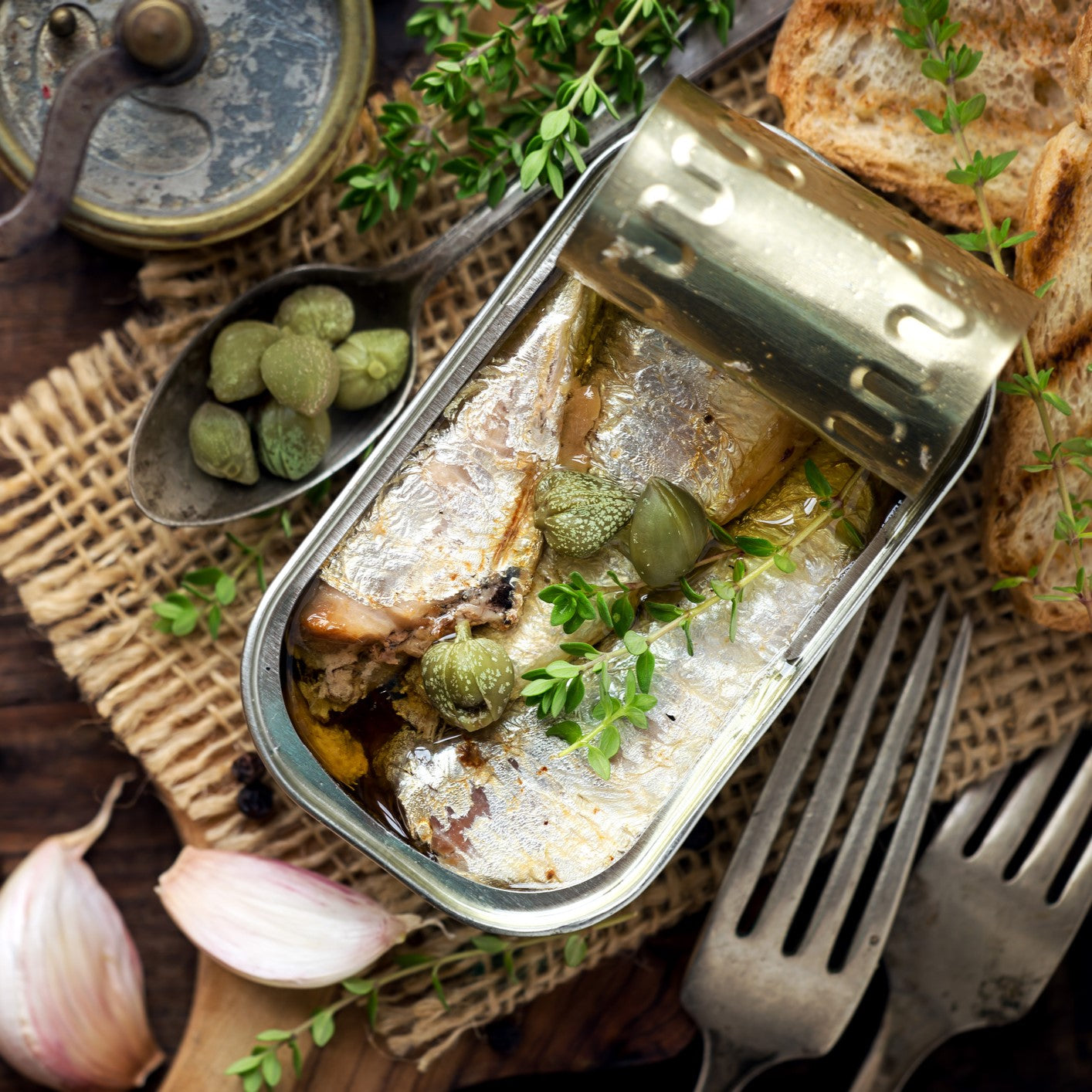
Open tin of sardines in olive oil served with capers, garlic, fresh thyme and toasted bread

Why do Portuguese sardines and capers pair so perfectly?

Just a few capers can completely change the taste of Portuguese sardines. Find out why this combination is so harmonious.

Read more